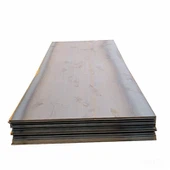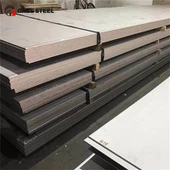

S275M and S275ML are European standard (EN 10025-4) fine-grain structural steels, both weldable and thermomechanically rolled, but differ in their low-temperature impact toughness: S275M requires 40 Joules at -20℃, while S275ML requires 27 Joules at a colder -50℃, making ML suitable for colder environments, though both offer 275 MPa minimum yield strength and are used in general construction and machinery.
S275M vs S275ML – The Complete Low-Temperature Comparison
|
|
S275M |
S275ML |
Winner for Low-Temp Projects |
|---|---|---|---|
|
EN 10025-4 |
EN 10025-4 |
- |
|
|
–20 ℃ |
–50 ℃ |
S275ML |
|
|
>=40 J |
>=27 J |
S275ML(much safer below –20 ℃) |
|
|
80–200 J at –20 ℃ |
100–250 J at –50 ℃ |
S275ML |
|
|
275 → 215–225 (by thickness) |
|||
|
370–530 |
|||
|
Elongation A5 (%) |
>=24 |
||
|
0.38 |
|||
|
Preheat-free Welding (mm) |
Up to 100 |
Up to 100 |
|
|
Price (December 2025) |
+50–80 USD/ton |
S275M cheaper, S275ML better value in cold |
|
|
Market Share (Cold-Region Projects) |
30–40 % |
60–70 % |
S275ML |
|
|
C |
|
|
P |
S |
|
V |
|
|
|
|
|
|
N |
|
|---|---|---|---|---|---|---|---|---|---|---|---|---|---|---|---|
|
S275M / S275ML |
0.14 |
0.50 |
1.50 |
0.030 |
0.025 |
0.05 |
0.10 |
0.020 |
0.05 |
0.30 |
0.30 |
0.10 |
0.55 |
0.015 |
0.38 |
|
|
|
|
A5 min (%) |
|
|---|---|---|---|---|
|
<=16 |
275 |
370–530 |
24 |
S275M: 40 J @ –20 ℃ S275ML: 27 J @ –50 ℃ |
|
16<> |
265 |
370–530 |
24 |
|
|
40<> |
255 |
370–530 |
24 |
|
|
63<> |
245 |
370–530 |
24 |
|
|
80<> |
235 |
370–530 |
24 |
|
|
100<> |
235 |
360–520 |
24 |
|
|
120<> |
225 |
360–520 |
24 |
|
|
150<> |
215–225* |
360–520 |
24 |
S275M is great for general use, while S275ML is chosen for structures needing better performance in very cold conditions, like some construction or offshore parts.
Impact Test Temp: The 'L' denotes a lower temperature test, meaning S275ML performs better in extreme cold.
S275M: >= 40J at -20℃ (longitudinal).
S275ML: >= 27J at -50℃ (transverse/longitudinal).
Applications: S275M is great for general use, while S275ML is chosen for structures needing better performance in very cold conditions, like some construction or offshore parts.
Similarities (S275M & S275ML)
Strength: Both have a minimum yield strength of 275 MPa (N/mm²) and tensile strength around 400-530 MPa.
Manufacturing: Both are produced via Thermomechanical Controlled Processing (TMCP) for fine grain structure, enhancing weldability and toughness.
Weldability: Excellent, with low carbon equivalent (CEV), often requiring no preheat for thicknesses up to 100mm.